

Hello Engineering Leaders and AI Enthusiasts!
This newsletter brings you the latest AI updates in just 4 minutes! Dive in for a quick summary of everything important that happened in AI over the last week.
And a huge shoutout to our amazing readers. We appreciate you😊
In today’s edition:
🧠 Kimi’s K3.1 Pro takes on the AI frontier
🏆 Meta’s new model leads the West’s open AI race
💻 OpenAI’s Terra makes AI computer use cheaper
🎮️ Google’s Genie 4 adds sound to AI worlds
💡 Knowledge Nugget: AI Testing vs Software Testing: How to Build Reliable Production AI Systems from Applied AI Razor
Let’s go!
Kimi’s K3.1 Pro takes on the AI frontier
Chinese AI lab Moonshot has introduced Kimi K3.1 Pro, an upgrade to its K3 model that competes with leading proprietary systems on coding and reasoning benchmarks. It also brings stronger performance in 3D creation, financial research, and long-running AI agent tasks, with a 1-million-token context window for handling large volumes of information.
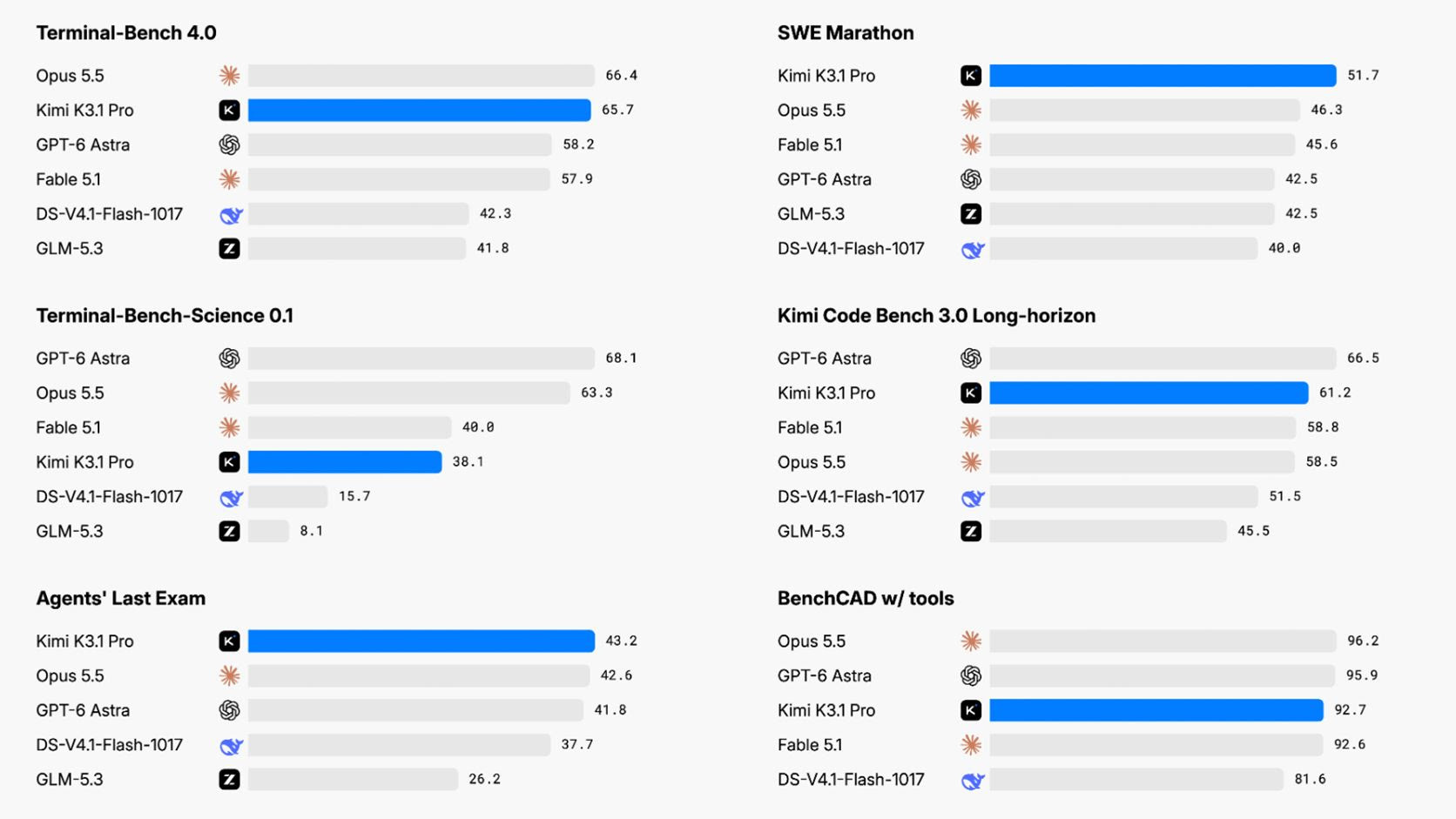
K3.1 Pro costs $2 per million input tokens and $10 per million output tokens through its API, and Moonshot plans to release the full model weights by November 4. That could give developers more control over how they deploy capable AI systems, while Moonshot reports a sharp drop in hallucinations on its own challenging factuality benchmark.
Why does it matter?
U.S. labs have kept their strongest cyber models behind closed doors, but Kimi K3.1 Pro is already nipping at their heels on defense. If open models keep closing the gap, defenders may get more accessible tools, but so could attackers. The race to secure AI may be moving faster than expected.
Meta’s new model leads the West’s open AI race
Meta has released Muse Spark Open, an 816-billion-parameter open-weight AI model built for coding and multi-step tasks. In a first for a model of its size, it can run locally across two Apple M5 Ultra Mac Studios, handling work such as fixing an iOS app and editing video in DaVinci Resolve without relying on the cloud.
The model performs competitively on knowledge and multimodal benchmarks, though several Chinese open-weight models still lead on overall intelligence and coding. Developers can download its weights and customize it for their own needs, giving them more control over where and how they run AI. The catch? Running it locally requires serious hardware, and its license comes with some commercial restrictions.
Why does it matter?
Meta is back in the open AI race after building its reputation on Llama before shifting toward closed models. Spark Open gives developers a powerful model they can run on their own hardware, while China’s open-model leaders still have the edge. It’s a sign that Meta wants a stake in both sides of the AI race: frontier performance and open access.
OpenAI’s Terra makes AI computer use cheaper
OpenAI has released GPT-6.1 Terra, a model built for computer use, visual reasoning, and everyday work tasks. It’s 50% cheaper at standard API rates than GPT-5.6 Terra, completes tasks over three times faster than OpenAI’s higher-end models, and nearly matches their visual reasoning performance at a lower cost.
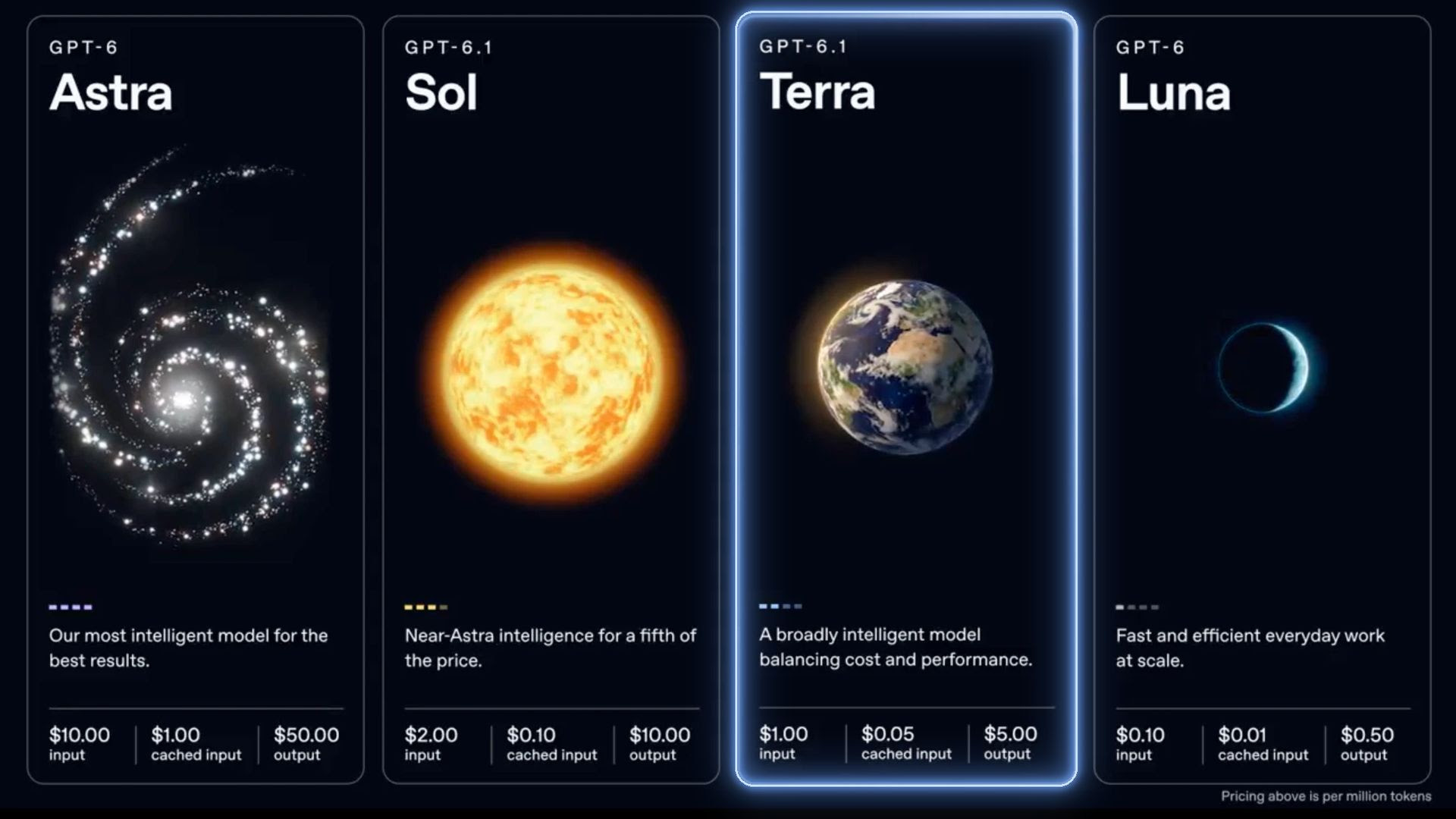
OpenAI says Terra’s error rate on prompts designed to trigger mistakes dropped from 53.6% to 16.7% at low reasoning effort, while its coding performance more than doubled on one benchmark. Available in ChatGPT Work, Codex, and the API, Terra makes it more practical to deploy AI for repetitive, computer-based work at scale.
Why does it matter?
Terra is a practical upgrade for cheaper, faster AI computer use, but it may struggle to grab the spotlight while Anthropic’s models dominate the performance conversation. The bigger win here is economics: making capable AI agents cheaper to run could matter more to businesses than another leap on the leaderboards.
Google’s Genie 4 adds sound to AI worlds
Google DeepMind has introduced Genie 4, a world model that turns text prompts into realistic, explorable environments. Users can change scenes in real time, interact with lifelike characters, and hear AI-generated sounds, music, and dialogue. Unlike a static video, these worlds respond to what users do next.
By combining Genie 4 with Gemini models, Google is exploring virtual environments where AI agents and robots can practice tasks before entering the real world. The technology could also help game developers and filmmakers prototype ideas faster, though consistency and complex interactions remain works in progress. Genie 4 is currently in research preview for trusted testers, with wider access planned.
Why does it matter?
Genie’s progress is getting hard to ignore, and adding sound and interactive characters makes this iteration feel like a real step forward. Gaming is the obvious use case, but Genie is starting to look just as interesting for filmmakers and creators who want to build and direct entire worlds, not just generate scenes.
Enjoying the latest AI updates?
Refer your pals to subscribe to our newsletter and get exclusive access to 400+ game-changing AI tools.
When you use the referral link above or the “Share” button on any post, you'll get the credit for any new subscribers. All you need to do is send the link via text or email or share it on social media with friends.
Knowledge Nugget: AI Testing vs Software Testing: How to Build Reliable Production AI Systems
The Applied AI Razor explores how traditional software testing changes when AI systems produce different outputs for the same input. Model updates, prompt changes, retrieved data, and tool interactions can all affect performance, making a single successful test an unreliable measure of quality. The article explains how teams can adapt the testing pyramid with curated test sets, automated evaluations, human review, and production monitoring.
The challenge goes beyond hallucinations. RAG systems need to be tested for retrieval quality as well as answer accuracy, while AI agents require checks across their decisions, tool calls, and intermediate steps. Clear acceptance criteria agreed upon with clients, along with defined quality thresholds and regression testing, help teams catch problems before they reach production.
Why does it matter?
Passing a test once is no guarantee an AI system will work tomorrow. Without continuous evaluation, teams are essentially shipping AI on trust. In production, reliability needs to be measured, not assumed.
What Else Is Happening❗
🛡️ Anthropic introduced AI self-assessment to flag harmful conversations after each reply, helping detect large-scale abuse, including over 100K child-abuse flags linked to a single API customer.
🧮 Axiom completed a machine-verified proof of the 15,000-page Classification of Finite Simple Groups theorem, using AI agents to rebuild decades of mathematical work in just 24 days.
🎨 Canva launched Craft, its first in-house AI image model, ranking No. 4 on DesignArena and turning generated images into editable designs.
🩺 Microsoft published results for MAI-DxO, an AI diagnostic system that outperformed physicians in medical case tests, reaching 80% accuracy on ER cases while using fewer, lower-cost tests.
🔐 PHP patched two critical security flaws discovered with OpenAI’s GPT-5.6 Sol, prompting the NSA to urge organizations unable to patch immediately to take affected systems offline.
🤖 Anthropic introduced Claude Duet, a personal AI agent that works around the clock, handling tasks like scheduling and daily briefings through its own cloud computer.
🚀 Inception launched Mercury 3, a diffusion-based language model claiming GPT-6 Luna and Claude Haiku 5.5-level performance at 4–8x the speed, with outputs exceeding 1,000 tokens per second.
🤖 Anthropic published a study showing AI agents now log 6x more hours than the employees using them, while junior hires have fallen from 27% to just 9% of its technical workforce.
👩💻 Harvard researchers found persistent gender gaps in AI adoption, training, and media representation, with AI headlines mentioning men 14.6 times more often than women.
New to the newsletter?
The AI Edge keeps engineering leaders & AI enthusiasts like you on the cutting edge of AI. From machine learning to ChatGPT to generative AI and large language models, we break down the latest AI developments and how you can apply them in your work.
Thanks for reading, and see you next week! 😊
Thanks a lot for featuring our article, Hiren! Really glad it resonated, and great to see it shared with your readers 🙌
Read OpenAI claims on model distillation. https://openai.com/index/disrupting-a-coordinated-model-distillation-campaign/?utm_source=chatgpt.com